
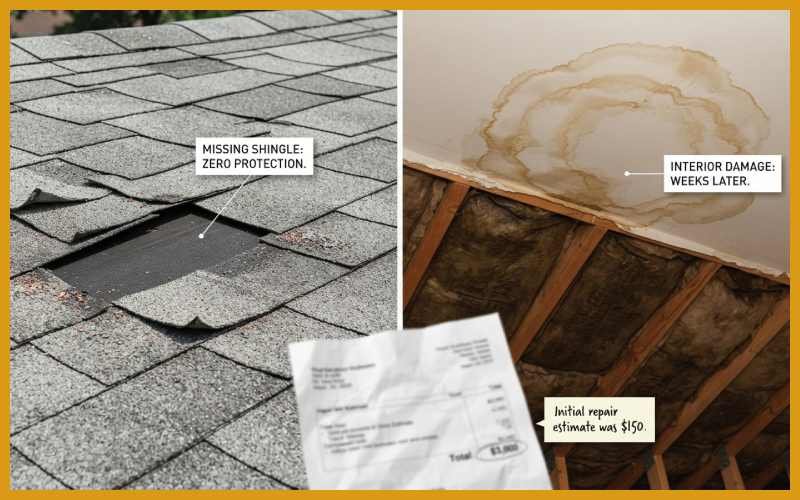
A missing shingle rarely looks like an emergency, a small, dark rectangle on an otherwise intact roof, easy to notice and just as easy to put off. But that gap is the one spot with zero protection against water, and the difference between fixing it this week and fixing it next spring can be the difference between a $150 repair and a $3,000 one.
Why Shingles Disappear
Wind is the usual suspect
The adhesives on shingles bond with one another when exposed to sunlight. This seal tends to wear out with time; therefore, the wind does not need to be as forceful as a hurricane to blow off a shingle from a roof in good condition.
Hail bruises before it removes
Hailstorms don’t generally blow shingles off directly, rather they break the mat beneath the granules, or the shingle gets loose to such an extent that it’s left for the wind to remove later on.
Hail bruises before it removes
A hailstorm usually does not blow the shingles off immediately; rather, it cracks the mat layer under the granules or loosens the shingle in such a way that when there is wind the next day, it completes the work.
Bad nailing shows up years later
Most asphalt shingles have an average life of 20 to 30 years; however, the sealant strip usually wears out much earlier than the shingle, causing wind uplift.
Overhanging branches do mechanical damage
The rubbing of branches against the roof wears down the granule layer and may eventually pull off the shingle without a storm.
Is It Actually Urgent?
Yeah, more than you’d think. The only layer of backup to underlayment for the exposed area is gone, and water can get through to the decking in a single moderate rain shower, and it spreads out across the decking in both directions before dripping down. This can translate into an interior stain several feet away from the original gap, often weeks and even months later. Look for brownish rings on the ceiling after a storm, an attic mustiness, sags in the insulation above, or even peeling paint. For more practical ways to stay ahead of these issues, see this guide to home maintenance tips for beginners.
What to Do Right Now
Avoid working on the roof. Areas where shingles are missing make for slippery ground, and one mistake may lead to a fall.
- From the ground, use binoculars if available, to spot the bare spot and any curled or uplifted shingles around it.
- Scan the garden and the gutters for clues that a shingle found in the flower bed came from.
- Inspect the attic with a flashlight for light, wetness or stains.
- Take pictures with timestamps if available. It may help if you file a claim.
- Get in touch with a roofing specialist, not a maintenance person, for anything more than an easily accessible shingle.
- If there is a chance of rain, ask if it is possible to put a tarp over it. Improperly set tarps trap moisture.
What Repair Actually Involves
In practice, fixing a missing shingle isn’t complicated: the roofer lifts the sealed tabs on the row above, slides the new shingle into place, and nails and reseals it — often 30 to 60 minutes of actual work. What you’re really paying for is the trip and the ladder, since most companies charge a minimum call-out fee no matter how small the job is. While they’re up there, a roofer who knows what they’re doing will also glance at the underlayment, poke around the decking for soft spots, check the shingles nearby for curling, and look at the flashing — problems in any of those tend to travel together.
As for cost, it’s a wide range and depends heavily on who you call. A handful of shingles usually runs $150–$400. A section damaged in a storm is more like $400–$1,200. If it’s spread across a bigger area or you’ve had repairs before, $1,200–$3,000 isn’t unusual. And if you’re looking at a full replacement, expect somewhere between $9,000 and $25,000. Prices swing a lot by contractor, so it’s worth calling around rather than taking the first quote.
Repair or Replace?
Repair usually makes sense for a roof under 10–12 years old with damage confined to one spot and no history of leaks. Replacement is worth considering past the 20-year mark, when shingles are curling or losing granules in multiple areas, leaks have happened more than once, or the decking underneath is soft or delaminating, patching shingles onto bad decking is only a short-term fix.
Insurance: What’s Actually Covered?
Wind and hail are typically covered, but it comes down to cause: insurers pay for a shingle lost in a documented storm, not one that failed from age or neglect. The Insurance Information Institute breaks down what’s generally included and excluded. A few catches worth knowing: many policies have a separate roof deductible (1–2% of dwelling coverage) instead of your regular one; some exclude purely cosmetic hail damage; claim windows can be as short as 12 months; and payouts may be reduced for the roof’s age without replacement-cost coverage. Photograph damage before making permanent repairs, and keep receipts for emergency trapping. It’s often reimbursable.
Preventing the Next One
During the high winds after a storm check your roof for damages. Check to make sure the gutters are clear of obstructions so water can drain behind the eaves of the shingles. Cut back any branches on trees that are too close to your roof. If you find a curling or raised shingle, replace it that same week. It is a simple and inexpensive repair. If your roof is older than 15 years, get one inspect annually or once every other year.
Conclusion
A missing shingle by itself is a minor, inexpensive fix. What makes it expensive is the delay, as water can seep into the decking, insulation, and eventually your ceiling. Inspect it safely, photograph it, and get a roofer out sooner rather than later. The gap itself is rarely the real cost; what happens underneath it while you wait is.



Pingback: What Is Decorilla? A Complete Guide to the Online Interior Design Service