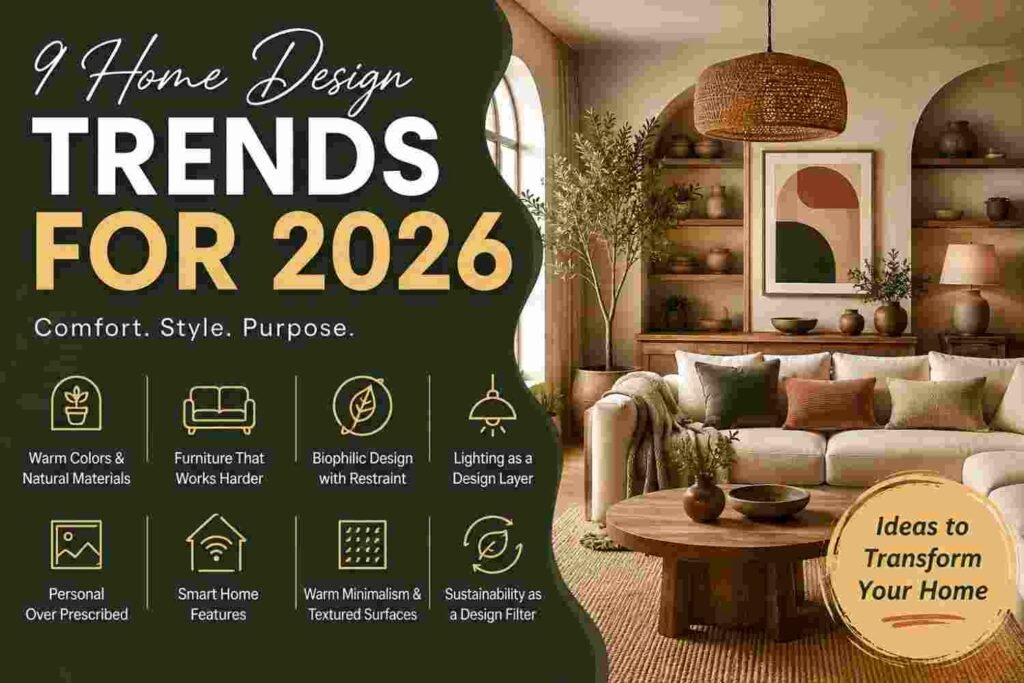
In the home design trend for 2026, we have seen a clearly defined theme emerging: comfort with purpose. Following ten years of going back and forth between extreme minimalist design and excessive maximalist design, people are finding a middle ground that feels thoughtful yet not forced, and flexible enough to accommodate their lifestyle. Here are nine home design trends, and how to use them.
Warm Colors & Natural Materials
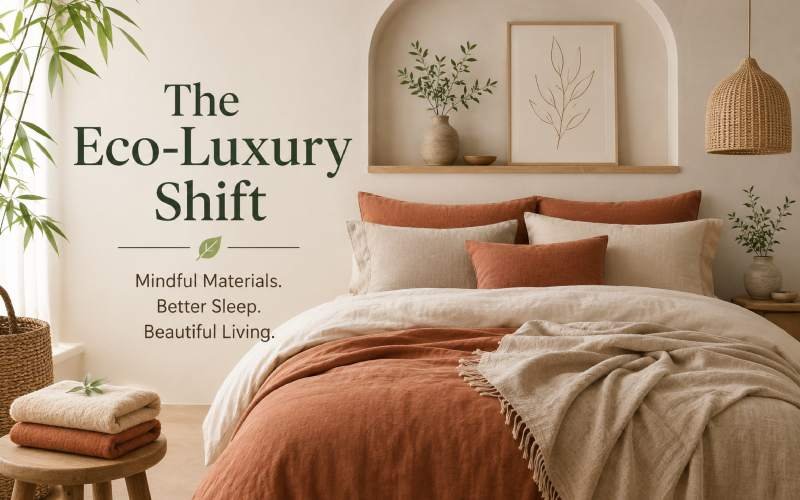
Instead of light neutrals (grey, white, etc.), we are going to use warming colors that give a cozy ambiance and include elements like terracotta, olive, beige, tone of brown, walnut, off-white colors. Hand in hand with natural materials such as wood (oak, walnut, ash), stone, cane, bamboo, linen and with some crafted ceramics (bowls, jars). This season’s easy access is not about painting but replacing textiles and smaller furniture. By changing the textiles and small furniture items in the room, you can easily change the tone of your rooms. For instance, replacing a quilt cover made of linen, a wool or jute rug, rattan pendant lights, or a wooden side table made of walnut will easily do the trick.
Furniture That Works Harder
As square footage is static, furniture is expected to do more. Storage beds, pullout dining tables, nesting tables, and convertible sofas, which can be changed into something different when there are guests, take the place of one-use pieces of furniture. The reason why curved sofas are still in demand has less to do with the sofa’s design and more to do with its ability to clear a pathway through the room. A much larger revolution is taking place at the level of the room: such as a spare bedroom becoming a home office, a dining table functioning as a workplace during the day. This effect is achieved in real life with the help of transitional furniture: a folding desk, a daybed instead of a double-sized guest bed, and ottomans with storage space for hiding office tools after 5 p.m.
Biophilic Design, Done With Restraint
Bringing the outdoors inside is not something new, but the method of achieving it has become quite sophisticated. As opposed to the former method of using small potted plants all around, which creates the sense that the place is in need of a bit of work, the modern method is to use only one or two large potted plants that really make an impression (fiddle-leaf fig, bird of paradise, olive tree). Along with the plant life used, biophilic design also includes maximum utilization of natural light (use of sheers rather than heavy drapes), preference of organic material to human-induced material, and use of natural colors (sage, clay, sand).
Lighting as a Design Layer, Not an Afterthought
Lighting is no longer purely functional but has become an important decorative element. Oversized pendant lights, artistic chandeliers, and wall sconces are chosen like works of art for both performance and visual appeal. The biggest trend affecting daily life is layered lighting. It combines ambient ceiling lights for general illumination with task lighting, such as floor and table lamps for reading or working. Accent lighting, including picture lights, LED strips, and uplighting, can highlight artwork or architectural features. A room lit by ceiling light alone is often perceived to be flatter than one illuminated by three different light sources.
Personal Over Prescribed
Monochromatic designs, where everything looks like it came from one catalog, are becoming less popular. More homeowners are designing rooms around the things they personally collect and love. Examples include travel souvenirs, second-hand or inherited furniture, displayed books, and unique artwork instead of reproductions. Of course, the danger here is chaos in terms of looks. However, the remedy lies in consistency, not style: choosing one or two elements that are repeated in all personal objects will make the interior design harmonious despite the variety. Here you can find information on how to combine personal objects in a modern style.
Smart Home Features That Disappear Into the Room
Technology at home is becoming more invisible. Consumers are choosing smart lights, automated blinds, voice-controlled climate systems, and entertainment systems that blend into the room. Flush-mounted speakers, concealed blinds, and switches that look like regular switches help maintain a clean appearance.
For people who want information about energy-efficient appliances, the home energy resources provided by the U.S. Department of Energy are a good source of commercial-free information.
Warm Minimalism & Textured Surfaces
Far from being dead, the all-out bare-room phase of minimalist design has ended. For 2026, minimalist design focuses on clean lines and neutral tones. Textural materials such as linen and unfinished wood add warmth. One or two carefully selected decor pieces complete the look. In addition, walls are being made decorative but not overwhelming, brightly painted. For example, plaster texturing, wood paneling, lime paints and textured papers can be used to bring any wall to center stage in your room.
Sustainability as a Design Filter, Not Just a Value
Sustainable alternatives have become a filter for other design decisions rather than a separate category. Homeowners are choosing recycled lumber instead of new materials. They also prefer old or vintage furniture over fast-furniture options. Durable items that can be repaired are favored over products that need frequent replacement. For homeowners who are dedicated to sustainable construction or renovation, the U.S. Green Building Council will be helpful with its LEED residential guidelines.
The Through line
None of these trends have anything to do with fashion. Taken as a whole, these trends depict the perfect home for 2026. It is versatile enough for hybrid working and multipurpose rooms. It is cozy enough to move beyond the cold minimalism of past decades. The design is also personal enough to avoid showroom aesthetics. At the same time, it remains efficient from both financial and environmental perspectives. The most successful interior designs won’t include all of the above trends in equal measure. Instead, the best-performing interiors will use two or three of these trends to address a specific issue in their clients’ homes.